
Teen Patti, also known as 3 Patti, is a thrilling 3-card game with roots in Indian poker.
It's commonly referred to as Indian Holdem Poker, Flash, Flush, or Three Card Brag.
Renowned as the largest multiplayer online card game globally,
Teen Patti offers an exhilarating gaming experience.
Join the world's most popular multiplayer card game, Teen Patti Master, and get up to Ten Lakh Free Chips! Enjoy the excitement of daily bonuses and endless entertainment.
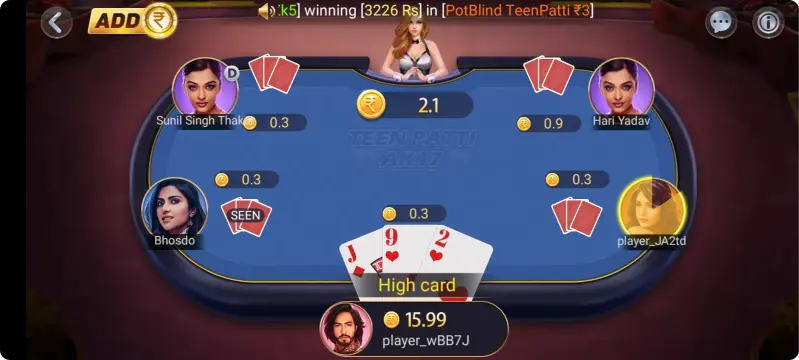






This is the Teen Patti Hub rules guide, written from how the game actually runs on a phone. Teen Patti is played with a standard 52 card deck, jokers removed. Three to six players sit at a table and everyone is dealt three cards face down. Before the deal, each player puts an equal stake into the pot, called the boot. From there the pot only grows, and whoever is left standing with the best three card hand takes it.
Once the cards are dealt you decide whether to look at them. A player who has not looked is blind. A player who has looked is seen. That single choice sets what every bet costs you for the rest of the hand.
A blind player bets the current stake. A seen player bets twice it. That is the trade: staying blind is cheaper per turn, but you are betting on cards you have not read. Most tables cap how many rounds you may stay blind, so blind play is a short term position, not a strategy you ride to the end.
Chaal is your bet to stay in the hand. You match the current stake, or raise it, and play moves to the next player. Betting continues clockwise for as long as people keep paying.
Pack is folding. You are out of the hand and you leave whatever you have already put in. There is no penalty beyond that, and packing early is the most underrated move in the game.
Side show is a private comparison. If you are seen, you can ask the seen player immediately before you to compare cards. They can refuse. If they accept, the two of you look, and the weaker hand packs at once. Nobody else sees anything. It is a way to knock out one opponent without paying to reach a full show.
When only two players are left, either can pay for a show. Both hands are turned over and the higher one takes the pot. A show cannot be called while three or more players are still in, which is why the betting has to thin the table out first.
Ranking runs from the table above: trail is strongest, then pure sequence, sequence, colour, pair, and high card last. If two hands tie on type, the higher cards decide it. Full detail on ties and edge cases is in our Teen Patti hand rankings guide.
A pure sequence beats a plain sequence. Three cards in a row of the same suit outrank three in a row of mixed suits. People lose pots assuming any run is a run.
A sequence beats a colour. This one is the reverse of poker, where a flush beats a straight. In Teen Patti the run wins. If you carry a poker habit to a Teen Patti table it will cost you.
A, K, Q is the top run and A, 2, 3 is the second. The ace works at both ends, but K, A, 2 is not a sequence at all.
Seen play costs double. Players look at their cards out of curiosity, then wonder why the hand drained their stack twice as fast. Look when you intend to commit, not before.
Teen Patti Hub keeps this guide aligned with how the game runs inside the app rather than table variations you will never meet on a phone. The same six hand ranks and the same blind and seen structure apply on every table in Teen Patti Master, whatever the stake.
| Rank | Hand | What it means | Example |
|---|---|---|---|
| 1 | Trail / Trio / Set | Three cards of the same rank | A-A-A is highest, 2-2-2 lowest |
| 2 | Pure Sequence | Three consecutive cards, all the same suit | A-K-Q of hearts |
| 3 | Sequence (Run) | Three consecutive cards, suits mixed | A-K-Q of mixed suits |
| 4 | Color (Flush) | Three cards of one suit, not consecutive | K-9-4 all spades |
| 5 | Pair | Two cards of the same rank | A-A-9 |
| 6 | High Card | None of the above; highest single card decides | A-K-J mixed, no pair |
| Action | What it does | What it costs |
|---|---|---|
| Blind | Bet without looking at your cards | Half the current stake |
| Chaal / See | Look at your cards, then bet | Double the current blind stake |
| Raise | Increase the stake for everyone still in | Double the current amount |
| Side Show | Ask to compare cards privately with the previous player | One stake into the pot |
| Pack / Fold | Leave the hand | You forfeit what you already staked |
| Show | Final comparison when two players remain | Stake as required by the table |
Slots sit alongside the card tables inside Teen Patti Master. They need no rules knowledge, which makes them the mode people drift to between hands. The mechanics below cover what the symbols do so you are not guessing at the screen.


JOKERS WILD symbol can substiute for any symbol except bonus and JACKPOT

3 same for 5 free spines
4 same for 10 free spines
5 same for 15 free spines
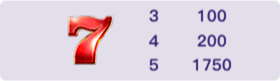
You can get a different percentage of the JACKPOT
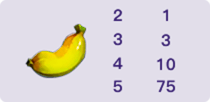
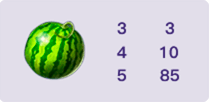
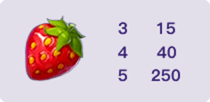

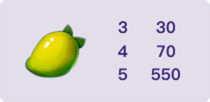
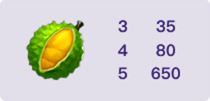
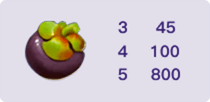
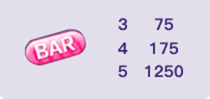


On the winning line, the same symbol in the first reel from left to tight can bewon
Slots are a side mode, not a card game. There is no blind, no chaal and no show. You set a stake, spin, and the paylines decide the result on their own.
Rummy is the other card game people open Teen Patti Master for, and it plays nothing like Teen Patti. Thirteen cards instead of three, two decks instead of one, and you win by arranging your hand rather than by out-betting the table. The rules below are the ones that decide a valid declaration.
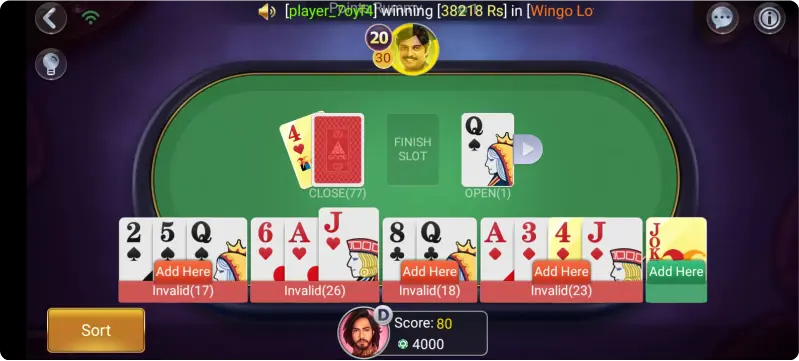

Identical cards to the one beneath the closed deck are designated as jokers. A joker functions as a substitute to any card.

A sequence consists of three or more cards of the same suit in consecutive order.
A PURE SEQUENCE is a sequence without any jokers.
IMPURE SEQUENCES are sequences that may contain jokers.
NOTE: An IMPURE SEQUENCE is not considered valid unless you also have a PURE SEQUENCE.

Sets are groups of 3 or 4 cards with the same rank but different suits.
Sets can include Jokers.
NOTE: Sets are not considered valid unless you have both a PURE SEQUENCE and an IMPURE SEQUENCE.
To win the game, a player must declare a Finish with the following:


1st life: Pure Sequence - no Jokers
2nd life: 2nd Sequence - Pure or Impure
Score: All 13 cards must form valid Sequences or Sets.
A player's score is the total value of all cards that are not part of a valid sequence or set.
The objective is to reduce your score to 0 by forming valid sequences and sets.


J, Q, K, and A each have a value of 10.
The values of the other cards are equal to their rank.
SCORE: Total value of cards not part of a valid Set or Sequence.
REMEMBER: Lower score is always better.
Teen Patti Master offers several exciting game variants beyond the classic format. Muflis (Lowball) reverses the normal hand rankings. The weakest hand wins, which levels the playing field and keeps even beginners competitive against seasoned opponents. AK47 is a wild-card variant where Aces, Kings, 4s, and 7s serve as jokers, dramatically increasing the chances of premium hands and creating larger pots. In the Joker variant, a random card is drawn as a wild joker before each round, adding an unpredictable twist that forces every player to rethink their strategy from scratch. Best-of-Four deals four cards to each player, who then selects the best three to form their hand. This rewards players who manage probabilities well and think a step ahead. The 999 variant assigns point values to each card combination, and the player whose hand totals closest to 999 wins the round, making card counting skills more valuable than ever.
These variants keep the gameplay fresh and give regular players entirely new challenges to master. Teen Patti Master rotates variant availability, so checking the lobby before each session helps you find your preferred format quickly. If you are new to variants, start with Muflis. Its reversed rankings are a great way to learn hand strength by understanding the game from the opposite direction. Download Teen Patti Master to access all variants and discover which style best suits your playing approach.
Even experienced players make costly errors when playing Teen Patti Master. The most common mistake is staying blind for too many rounds. While playing blind reduces your bet cost per round, remaining blind beyond two or three rounds burns through your stack before you see promising cards. Over-betting on a mediocre hand is another frequent error. A pair of low cards is a pair, but it will lose to any stronger pair or sequence. Match the pot only when your hand has genuine strength relative to the table's betting pattern. Ignoring the sideshow option is also a trap: when you hold a strong hand, requesting a sideshow eliminates weaker opponents early while keeping the pot growing in your favor.
Neglecting to track opponent playing styles costs wins over time. Tight players fold easily under pressure; loose players call with anything. Adjust your aggression and bet sizing accordingly. Never ignore position at the table. Acting later in a round gives you more information about opponent hands before you commit chips. Finally, chasing losses by doubling bets after a bad round is the fastest way to drain your balance. Stick to your bankroll plan regardless of short-term results. Teen Patti Master rewards patience and information management over pure luck. A calm, observant player with a modest hand will consistently outlast a reckless player holding a stronger one over enough sessions.
What is the strongest hand in Teen Patti Master?
The strongest hand is the Trail or Set. Three cards of the same rank (for example, three Aces). It beats all other combinations including a Pure Sequence. Among Trails, three Aces is highest and three 2s is the lowest.
How many players can join a Teen Patti Master table?
A Teen Patti Master table accepts 2 to 6 players depending on the table format. Standard tables support up to 6 players. Private tables can be set up for 2 to 5 friends. The game starts once the minimum number of players are seated and bets are placed.
What is the difference between Blind and Seen in Teen Patti?
A Blind player bets without looking at their cards and pays half the current stake. A Seen player has viewed their cards and must pay the full current stake or more. Playing blind reduces your cost per round but adds risk. Most experienced players choose to see their cards after one or two blind rounds.
Can you play Teen Patti Master without real money?
Yes. Teen Patti Master offers free chip tables where you play with virtual chips that carry no real-money value. New players receive a welcome bonus of free chips to start. Real-money tables are available separately and require a deposit. You can switch between modes from the game lobby.
How do you win real cash on Teen Patti Master?
To win real cash, play at real-money tables, build a strong hand, and outlast opponents through smart betting and reading the table. Winnings are credited to your in-app wallet and can be withdrawn via UPI, bank transfer, or Paytm once you meet the minimum withdrawal threshold.